
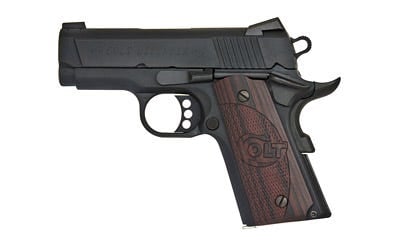
Understanding Firearms Provision
You’ve just been approved for your Federal Firearms License. Your first customer walks in, points to a Ruger Mark IV 22/45 Lite, and asks to buy it. Before you can hand it over, you must complete a Form 4473 and run an NICS check. That act—the legal transfer of a firearm from a licensed entity to a qualified individual—is the core of firearms provision. It’s not just selling a product; it’s a regulated transaction governed by a complex web of federal, state, and local laws.
The Legal Framework: More Than Just a Background Check
Firearms provision operates under the Gun Control Act of 1968 and the Brady Handgun Violence Prevention Act. As an FFL holder, my responsibility starts with verifying the buyer’s identity and residency. The ATF Form 4473 is the cornerstone document, recording the firearm’s details—make, model, caliber, and serial number—and the transferee’s information. A common misconception is that a “clean” NICS check is the finish line. It’s not. I’m legally required to deny the sale if I have reasonable cause to believe the person is prohibited, regardless of the NICS result. This includes signs of intoxication or intent to commit a crime. State laws add another layer; some impose waiting periods, require firearm safety certificates, or regulate private party transfers. Provision isn’t passive compliance; it’s active due diligence.

Categories of Firearms and Their Provision Rules
Not all firearms are provisioned the same way. The law breaks them into distinct categories with different rules. Title I firearms—your standard rifles, shotguns, and handguns—follow the standard 4473/NICS process. However, items like the Crosman Comrade AK Air Rifle are not considered firearms under federal law, as they are powered by CO2. Title II or NFA items—machine guns, short-barreled rifles/shotguns, suppressors, and destructive devices—require a much more intensive provision process involving a Form 4, a $200 tax stamp, fingerprint cards, passport photos, and ATF approval that can take 6-12 months. Understanding these categories is non-negotiable for lawful operation. At Americans Gun, we ensure our listings clearly indicate the classification of every item in our Firearms collection.

The Role of Ammunition and Components
Provision extends beyond the firearm itself to the ammunition and components that make it function. While federal law does not require a background check for ammunition, several states like California, Illinois, and New York do. Furthermore, selling components requires knowledge. Providing the correct Thompson Center Sure Fire Sabots for a specific muzzleloader or the right NAA Cap and Ball .22 caliber rounds is part of the service. Selling a conversion kit, like the Thompson Center 209 Conversion Kit, requires ensuring the customer’s firearm is compatible. A negligent provision of ammunition—like selling .300 BLK to someone who thinks it’s for their .223 Remington rifle—can have catastrophic consequences. Knowledgeable provision prevents accidents.
Record-Keeping and Compliance Audits
The transaction doesn’t end when the customer walks out the door. The ATF requires FFLs to maintain the Form 4473 and the corresponding Acquisition & Disposition (A&D) logbook entry indefinitely. In an audit, which can happen unannounced, the inspector will trace specific firearms from acquisition to disposition, verifying every “bound book” entry matches the physical 4473s and the inventory on hand. Discrepancies, even minor ones, can result in warnings, fines, or license revocation. This is why meticulous record-keeping is the backbone of lawful firearms provision. It’s a permanent chain of custody. When you order from a professional operation like Americans Gun, you can be confident that every step, from our acquisition to your provision, is documented with precision.

FAQs on Firearms Provision
What is firearms provision?
Firearms provision is the legal process of transferring a firearm from a licensed dealer (FFL) to an end-user. It involves verifying the buyer’s eligibility through a background check (NICS), completing the ATF Form 4473, and complying with all applicable state and local laws. It is the regulated act of selling or transferring a firearm, not merely a commercial sale.
What is a section 1 firearm?
In the UK, a “Section 1 Firearm” refers to most rifles and long-barreled shotguns that require a specific firearm certificate (FAC) to possess. This is a British legal term. In the U.S., the closest equivalent would be a Title I firearm under the Gun Control Act, which includes standard rifles, shotguns, and handguns available through the standard FFL transfer process with a Form 4473.
Browse our firearms collection
Last updated: April 14, 2026