
Essential Firearms for Every Owner
Forget the endless “top 10” lists. A functional collection is built on purpose, not popularity. The right firearms are tools that serve distinct roles: training, defense, hunting, and heritage. Based on decades of handling everything from .22 plinkers to big-bore rifles, here are the foundational firearms you should own and why.
The .22 LR Trainer: Building Fundamentals
Every shooter needs a .22 Long Rifle. It’s not a debate. The negligible recoil and low cost of ammunition make it the only practical tool for developing marksmanship fundamentals. You can shoot 500 rounds for the price of 50 rounds of 9mm. The Ruger 10/22 is the undisputed king of the semi-auto .22 rifle for its reliability and vast aftermarket. For a pistol, the Browning Buck Mark or Ruger Mark IV series, like the Ruger Mark IV 22/45 Lite, offer exceptional out-of-the-box accuracy. The Mark IV’s one-button takedown is a game-changer for cleaning. Spending a year with a .22 will make you a better shooter with any centerfire cartridge. It’s the first gun you should buy, and the one you’ll never sell.
The Defensive Handgun: Reliability Over Gimmicks
Your defensive handgun isn’t a range toy; it’s an insurance policy. This demands proven reliability above all else. In 9mm, the Glock 19 remains the benchmark for its simplicity, capacity (15+1), and durability. The Smith & Wesson M&P9 2.0 is a stellar alternative with an excellent grip texture and trigger. For those who prefer a hammer-fired option, the Sig Sauer P226 is a combat-proven workhorse. The key is to choose a platform from a major manufacturer with a long track record, abundant holster options, and easy-to-find magazines. Then, buy a quality belt, holster, and a case of practice ammo. We stock a wide selection of these proven models in our Semi Auto Pistols collection for this exact reason.

The Modern Sporting Rifle: Versatility Defined
The AR-15 platform is the most versatile firearm an American can own. Chambered in 5.56 NATO/.223 Remington, it serves as a capable home defense tool, a varmint rifle, a competition platform, and a scout rifle for medium game with the right ammunition. Its modularity is its strength: you can configure one lower receiver with multiple uppers for different roles. A 16-inch carbine with a red dot sight is the ideal starting point. Brands like BCM, Daniel Defense, and Smith & Wesson’s M&P15 series offer reliable rifles at various price points. The platform’s light recoil, accuracy, and ubiquitous parts support make it non-negotiable. Pair it with a good sling, a weapon light, and plenty of .22 caliber training analogs like the Crosman Comrade to practice mechanics affordably.

The Hunting Rifle: Precision for the Field
A dedicated hunting rifle is about delivering ethical, precise energy at distance. The caliber depends on your game. For deer-sized game in North America, the .308 Winchester and 6.5 Creedmoor are top choices, offering flat trajectories and manageable recoil in a short-action platform. The Tikka T3x and Bergara B-14 are outstanding production rifles known for their superb out-of-the-box accuracy. For larger game like elk, step up to a .300 Winchester Magnum. For those who hunt in muzzleloader-only seasons, a modern inline like the Thompson Center Encounter or CVA Paramount is essential. These aren’t your grandfather’s smoke poles; they’re highly accurate, often capable of 200+ yard shots with saboted projectiles like the Thompson Center Sure Fire Sabots. Mount a quality 3-9x or 4-12x scope, learn your dope, and practice from field positions.
The 12-Gauge Shotgun: Ultimate Utility
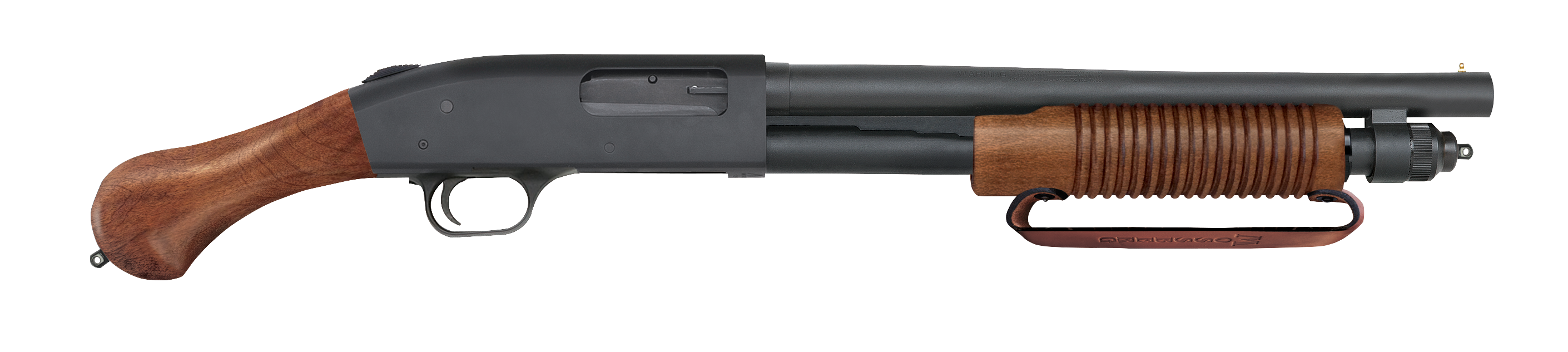
No collection is complete without a 12-gauge pump-action shotgun. It’s the most adaptable tool you’ll own. With #7.5 shot, it’s for clays and birds. With 00 buck, it’s for home defense. With a rifled slug, it’s a 100-yard deer rifle. The Mossberg 500/590 and Remington 870 are the standards for a reason—they’re simple, rugged, and have been proven for generations. The Mossberg’s tang safety and dual action bars are advantages for many shooters. Start with a 28-inch barrel for hunting and a separate 18.5-inch cylinder-bore barrel for defense. The ability to change roles by swapping barrels or loads is unmatched. It’s the one gun that can truly do it all, which is why we always recommend having one, and you can find several variants in our Firearms collection.

Is a 9mm enough for home defense, or should I get a .45?
9mm is absolutely sufficient. Modern 9mm defensive hollow points from Federal, Speer, or Hornady offer excellent penetration and expansion. The advantages are lower recoil, higher capacity, and lower ammo cost for practice. The .45 ACP is effective but offers fewer rounds in a similar-sized pistol and more recoil. Shot placement and training matter far more than a tenth of an inch in bullet diameter.
What’s the best first rifle for a new hunter?
Start with a bolt-action rifle in .308 Winchester or 6.5 Creedmoor. Both are widely available, effective on all North American deer, and manageable in terms of recoil. The Ruger American Rifle or Savage Axis II with an included scope are excellent budget-friendly packages that are more than accurate enough for hunting. Spend the money you save on a quality sling, hearing protection, and as much practice ammo as you can afford.
How many rounds of ammunition should I keep for each firearm?
This is a minimum: 1,000 rounds for your primary defensive caliber (9mm, 5.56). 500 rounds for your hunting caliber. 5,000 rounds of .22 LR. For shotguns, 250 target loads, 50 buckshot, and 25 slugs. Ammunition is a consumable component of training. It’s also the first thing to disappear during shortages. Building this reserve gradually during sales is a core part of responsible ownership.
Browse our firearms collection
Last updated: April 04, 2026