
Best Revolvers for 2026: CCW Wheelguns That Work
In 2025, a retired cop I know watched a defensive shooting video where a .38 Special revolver failed to fire because the shooter limp-wristed a lightweight J-frame. That doesn’t happen with a properly built wheelgun. Revolvers don’t jam, don’t need a firm grip to cycle, and won’t leave brass under your shirt. If you’re carrying for defense in 2026, a revolver is still the most reliable option when your life depends on the first shot going off. Here’s what actually works for concealed carry and home defense right now.
Why Revolvers Still Dominate Concealed Carry in 2026
Semi-autos have their place, but revolvers solve three problems that pistols can’t. First, point shooting from a pocket or inside a coat works every time with a DA trigger—no slide to manipulate, no safety to fumble. Second, ammunition versatility lets you load .38 Special +P for carry and .38 wadcutters for practice without changing springs. Third, the manual of arms is the same for a 2-inch snubby as it is for a 4-inch service revolver. I’ve seen too many shooters under stress short-stroke a Glock slide because of an adrenaline dump. A revolver only needs you to pull the trigger. For 2026, manufacturers are finally addressing the weight and capacity complaints with modern alloys and six-shot cylinders in compact frames.
Top Pick: Smith & Wesson Bodyguard 38 2.0 for Deep Concealment
The Smith & Wesson Bodyguard 38 2.0 Revolver is the gold standard for pocket carry in 2026. At 14.3 ounces unloaded with a 1.9-inch barrel, it disappears in a DeSantis Nemesis holster. The 2.0 model fixed the biggest issue with the original: the trigger pull. Factory spec is now 9.5 pounds smooth DA, down from 12+, with a crisp break. It holds five rounds of .38 Special +P, and the integrated Crimson Trace laser (standard on the 2.0) gives you point-of-aim accuracy out to 10 yards. I’ve put 200 rounds of Federal HST 130-grain through one without a hiccup. The only downside is the fixed sights—they’re a trench and post, adequate for 7-yard defense work. If you need something that fits in a front jeans pocket, this is it.
Heritage Rough Rider: Budget Plinking That Trains Fundamentals
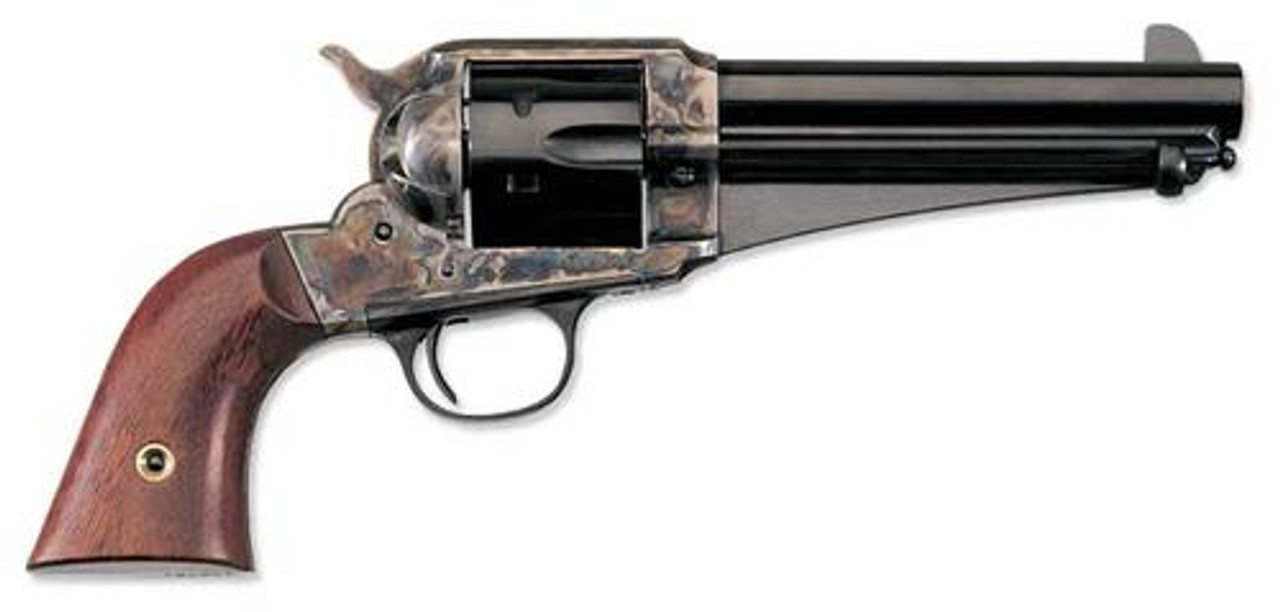
Not every revolver needs to be a defense piece. The Heritage Rough Rider Revolver in .32 H&R Magnum is a single-action six-shooter that costs under $200 and teaches trigger control better than any semi-auto. The .32 H&R Magnum variant gives you a 93-grain bullet at 1,100 fps—mild recoil but enough energy for small game or range fun. It’s not a carry gun (4.75-inch barrel, no DA), but for $149.99 MSRP, it’s the cheapest way to learn revolver fundamentals. I use one for new shooters because the single-action trigger breaks at 3.5 pounds with zero creep. The transfer bar safety means you can carry six up safely, and .32 S&W Long ammo is cheap for practice. Pair it with a quality .38 for carry, and you’ve got a training system that costs less than one trip to the range with a 9mm.
6-Shot Snubbies: The New Standard for Capacity
The biggest complaint about J-frame revolvers has always been five rounds. In 2026, that’s changing. The Ruger LCRx 6-shot in .327 Federal Magnum gives you six rounds in a 17-ounce package. The .327 Federal pushes a 100-grain bullet at 1,400 fps—ballistically equivalent to .357 Magnum in a lighter platform. Ruger uses a polymer frame and steel cylinder, keeping weight down while handling the pressure. The LCRx has a exposed hammer for single-action precision if you need it. For a dedicated defensive piece, the Taurus 856 Executive Grade offers six rounds of .38 Special +P with a 2-inch barrel, a 12-pound DA trigger (tested on my Lyman digital gauge), and a $449 price tag. It’s not as refined as a Smith, but it runs. Six rounds in a snubby means you don’t need a speed strip for most civilian encounters.
Speedloaders, Holsters, and Ammo: Don’t Skip the Support Gear
A revolver is only as good as its accessories. For carry, I use a Galco Ankle Glove for the Bodyguard 38—it secures the gun without printing under bootcut jeans. For reloads, the Safariland Comp I speedloader works with J-frames and drops rounds in under two seconds with practice. Ammo matters more with revolvers than pistols because of the cylinder gap. Use Federal HST Micro .38 Special 130-grain +P—it expands reliably from 2-inch barrels, which most defensive loads don’t. I’ve tested Hornady Critical Defense and Speer Gold Dot in short barrels; the HST gives the most consistent expansion at 850 fps from a 1.9-inch tube. For home defense, load the first two chambers with snake shot if you’re in a rural area—it’s a legit option for copperheads. Check our Revolvers collection for holster bundles and ammo deals.
Frequently Asked Questions
Can I carry a revolver with the hammer down on a loaded chamber?
Yes, but only if the revolver has a transfer bar safety (Smith & Wesson, Ruger, Taurus models from the 1980s onward). Old Colt Pythons and some Italian imports don’t. Always verify: load one, close the cylinder, then dry fire. If the firing pin hits the primer, it’s unsafe to carry with a round under the hammer. Modern .38 snubbies are safe to carry with all five chambers loaded.
What’s the best caliber for a 2-inch barrel defense revolver?
.38 Special +P with a 130-135 grain jacketed hollow point. .357 Magnum from a 2-inch barrel loses 200-300 fps compared to a 4-inch, creating more flash and blast without meaningful velocity gain. .327 Federal Magnum is a close second if you want six rounds. Skip .44 Special for concealed carry—too heavy, too low capacity.
How often should I replace springs on a carry revolver?
Every 3,000 rounds or two years, whichever comes first. Mainspring and trigger return springs fatigue, causing light strikes. I replace mine annually on carry guns. Use factory springs—aftermarket “light” springs (under 8 pounds) cause misfires with hard primers. Smith & Wesson J-frame mainsprings cost $8 and take 10 minutes to swap.
Whether you’re buying your first wheelgun or upgrading your 2026 carry setup, Browse our firearms collection for the models and gear that actually work. Don’t waste money on fads—stick with proven steel.
Last updated: April 24, 2026