
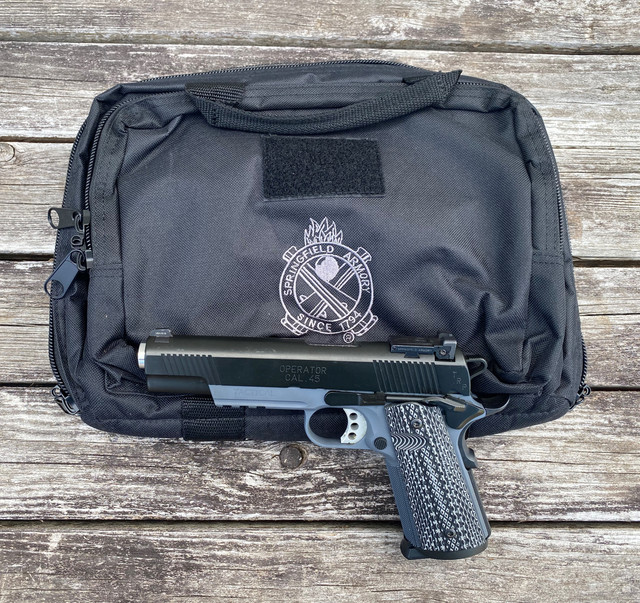
Firearms and Toolmark Examiner: The Science
When a Ruger Mark IV .22 LR pistol is test-fired into a water tank, the recovered bullet will bear microscopic striations unique to that specific barrel. A firearms and toolmark examiner uses those imperfections, created during manufacturing and wear, to link that bullet to that gun to the exclusion of all others. This isn’t TV magic; it’s a meticulous forensic discipline built on the principle that no two manufactured objects wear identically.
The Core Principle: Individual Characteristics
The entire field rests on the axiom of individuality. During manufacturing, tools like broaches, reamers, and cutting bits impart microscopic imperfections onto a firearm’s components. The firing pin, breech face, extractor, ejector, and barrel are all tooled surfaces. When a cartridge is fired, these surfaces press into the soft brass of the casing and engrave the bullet as it passes through the rifling. The resulting marks—striations on bullets and impressed patterns on casings—form a “fingerprint.” An examiner compares these under a comparison microscope, side-by-side, looking for consecutive matching striations (CMS) or pattern agreement to declare a match. This is why the condition of your barrel matters; heavy corrosion or aftermarket modifications can alter these signatures.
Beyond the Gun: Toolmarks in Evidence
An examiner’s expertise extends far beyond matching bullets to barrels. “Toolmarks” refer to any impression left by a hard object on a softer surface. This includes the marks left by a screwdriver used to pry open a window, the shear marks on a cut bicycle lock, or the impression of a firing pin on a primer. The process is the same: the examiner obtains the suspected tool, creates test marks in a similar material (like lead or soft metal), and compares them to the evidence under magnification. The Thompson Center Pro-Hunter Triumph And Endeavor Breech Plug, for instance, is a tool that would leave distinct marks if used improperly or found at a scene. Understanding how firearms components interact as tools is fundamental.

The Examination Process: From Receipt to Report
It starts with proper chain of custody. An examiner receives evidence, documents it, and conducts a function check on any submitted firearm. For a cartridge case comparison, they’ll first fire test rounds from the suspect weapon into a bullet recovery tank. Using a comparison microscope, they mount the evidence bullet or casing next to a test-fired sample. By manipulating the stages and lighting, they search for patterns of matching striations. A conclusive identification requires sufficient unique, corresponding marks. They then photograph the matching areas through the microscope’s oculars. Every step is documented in detailed notes, as the examiner must be prepared to defend their methodology and conclusions under cross-examination in court. The precision required is why enthusiasts at Americans Gun appreciate the machining on firearms like those in our Semi Auto Pistols collection.

Limitations and Modern Challenges
The science has faced scrutiny, particularly regarding the subjective nature of pattern matching and the statistical basis for “identification to the exclusion of all others.” Examiners don’t work with population databases like DNA analysts. Furthermore, certain conditions can complicate analysis. Heavily damaged or fragmented bullets, barrels with severe leading or fouling, and the use of non-jacketed ammunition like some NAA Cap and Ball .22 caliber rounds can obscure individual characteristics. The rise of polymer-framed pistols with interchangeable parts and the prevalence of “Glock smiley” breech face marks common to many pistols of the same model require examiners to be exceptionally diligent. Modern tools like 3D virtual microscopy and automated ballistic imaging systems (such as NIBIN) are aids, not replacements, for the trained examiner’s eye.

Why This Matters to Responsible Gun Owners
Understanding toolmark examination reinforces critical safety and legal practices. It underscores the importance of maintaining your firearm in good condition; a clean, properly maintained barrel provides clearer test results if your firearm is ever involved in a lawful defensive incident. It highlights why you should never loan your firearm to an untrusted individual—its unique markings tie it directly to you. It also explains the irreplaceable value of keeping your original purchase documentation and serial number records. If your firearm is stolen and later recovered by police, a firearms examiner may be the one to link it back to your police report. The tools and components we sell at Americans Gun, from a complete Crosman Comrade AK Air Rifle to specific Thompson Center Sure Fire Sabots, all leave their own marks, a reminder of the permanent interaction between a tool and its use.
Can a firearms examiner determine exactly how many rounds have been fired through a barrel?
No. An examiner cannot determine round count. While barrel wear progresses with use, the rate is inconsistent and depends on ammunition type, cleaning methods, and firing schedule. They can often identify general condition (new, moderately used, heavily eroded), but not a precise number.
If I replace the barrel on my pistol, does it get a new “fingerprint”?
Yes, absolutely. The new barrel, with its unique manufacturing marks, becomes the source of striations on fired bullets. However, other marks on cartridge cases from the firing pin, breech face, extractor, and ejector will typically remain the same unless those parts are also replaced.
Do air guns or BB guns leave toolmarks that can be examined?
Yes, they can. While traditional rifling may be absent, the compression chamber, firing mechanism, and even the pellet skirt can bear individualizing marks. A CO2-powered BB rifle can leave toolmarks on the BB itself or the CO2 cartridge. The principles of toolmark examination apply to any device that imparts force through mechanical contact.
Browse our firearms collection
Last updated: March 28, 2026